

Pull back a ceiling tile in an older Brevard industrial or flex building and you tend to find the same three things: copper left behind by two or three previous tenants, a telecom closet that now doubles as storage, and a switch nobody has logged into since the day it went in. That’s the network most local AI plans are about to land on.
The software is the easy part. A shop manager can sign up for an AI estimating assistant on a Tuesday afternoon. Getting the building underneath it to behave takes longer, and on the Space Coast the building comes with its own conditions: old cable plant, a supplier base that handles controlled data, and a storm season that runs from June 1 through November 30.
Brevard Business Telephone Systems (BBTS) has designed, installed and supported phones, cabling and networks in this county since 1982. What follows is how we would walk a Rockledge, Melbourne or Titusville business through getting ready, in the order we would actually do the work.
What AI Traffic Looks Like in a Brevard Business
AI rarely arrives as one big system. It shows up as a dozen small habits, and each one leans on the network in a different way. Here are three composite pictures, not client stories.
The aerospace or defense supplier. Engineers push large CAD and inspection files to cloud tools, and quality staff want AI to summarize reports. The traffic is heavy and bursty, and some of it may touch controlled unclassified information, so certain tools have to stay off the segment that holds it.
The manufacturer or warehouse. Cameras and handheld scanners feed analytics software, and the building is mostly steel and concrete. Wi-Fi coverage and uplink capacity decide whether a tool works on the floor or only in the front office.
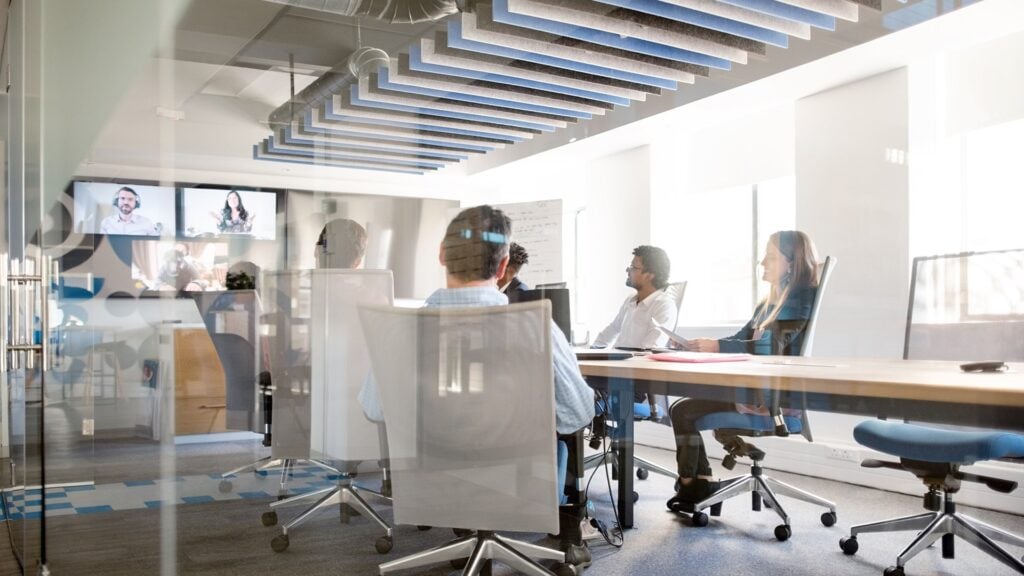
The office-based firm. Meeting transcription, writing assistants and call summaries all ride the same network as the phones. When a big upload competes with a call, the call is what people notice.
In all three, the software worked in the demo. What decides the result is the cabling, the switching, the segmentation and the circuit underneath it.
Start Behind the Walls: Cabling Is the Budget Line Nobody Plans For
Software gets the attention, but the cable plant sets the ceiling. Cat3 and early Cat5 runs were built for telephones and 10/100 Ethernet, and no setting on a new switch changes what the copper in the wall can carry.
When BBTS walks a building, these are the questions we start with:
- Is every drop tested? We certify each drop to TIA standards and hand over the test results, so you know what you actually own.
- Can anyone say what’s in the closet? Unlabeled patch panels and dead copper from earlier tenants make every later change slower and riskier.
- Where does copper run out? Twisted pair is specified to a 100-meter channel. Past that, or between buildings, the answer is fiber.
- Which pathway will survive a storm? Aerial fiber between buildings is the first thing to come down in a named storm. Underground in conduit is usually worth the premium for a site that has to be running the following week.
Our structured cabling work is led by an RCDD-registered designer on staff, and every installation carries a 5-year warranty. The full scope is on our structured cabling in Brevard County and cabling solutions pages, and the fiber side is in our guide to fiber optic cabling in Brevard County.
The Switch Closet: Hardware That Can Carry the Load
Most slowdowns blamed on the AI tool turn out to be local. Here’s a short field guide to what we get called about:
“Wi-Fi is fine up front and dead on the floor.” Someone placed the access points by guesswork. We fix it with a wireless site survey, and we spend the most time in metal-heavy buildings.
“Calls stutter when someone uploads a file.” Voice and data share one flat network with no priority. A managed switch with QoS puts calls first.
“A guest laptop can see the file server.” Nothing’s segmented. VLANs for staff, guests, voice and cameras keep each in its own lane.
“Nobody knows why it is slow.” Unmanaged switches are a black box, and they don’t tell you anything. Managed, monitored switching gives you port-level data, alerts and remote access.
What we typically specify
- Managed PoE+ switching for phones, access points and cameras
- Gigabit to the desk, with 10GbE uplinks between switches
- Wi-Fi laid out from a site survey, with separate staff and guest networks
- A firewall and perimeter configuration, plus site-to-site VPN for multi-location businesses
- Monitoring and local support after the install
Details are on our network solutions page.
Segment First, Then Connect the AI Tools
Every AI tool is one more service your network talks to. We treat it like guest Wi-Fi: give it its own segment, and give the segment only the access it needs. BBTS designs VLANs for voice, staff, guests and cameras, and a lane for AI and cloud tools sits naturally beside them. A compromised guest laptop, an internet-connected camera or an unvetted browser plug-in then has nowhere useful to go.
For defense and aerospace suppliers this matters more. If any of your work involves controlled unclassified information, the assistants and plug-ins your staff try on their own should not share a segment with the systems holding it. Segmentation is the network side of that answer. Whether a particular tool may touch controlled data isn’t a network decision. It’s a decision for your compliance lead and your contract language, and BBTS does not certify anyone as CMMC compliant. Our guide to network infrastructure for CMMC readiness in Brevard covers what the cabling and network side can and cannot do.
Plan the Circuit for Hurricane Season
A cloud AI tool is only as available as the circuit that reaches it. Three things we check before storm season:
- Real diversity. Two lines from the same carrier through the same conduit or pole are one line the day something cuts it. Redundancy means a different provider where possible, a different medium, and a different physical entry into the building. Our redundancy guide for Brevard businesses walks through the traps.
- A failover you have tested. A backup that hasn’t ever carried live traffic is a theory. Pull the primary on a quiet Saturday and watch what happens to the phones, the cloud apps and card processing.
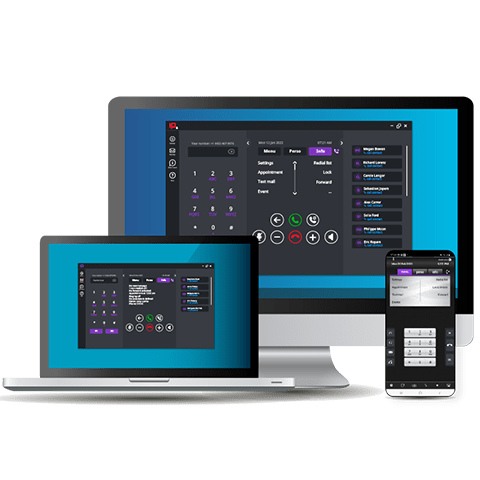
- Voice that follows people. Cloud calling (UCaaS) can reroute to mobile phones when the office loses power or connectivity, which is the case for moving off an on-site phone system in a county that sees hurricanes. Our business phone system work starts there.
Carrier-neutral internet and automatic failover are part of our carrier solutions, and multi-location businesses can add SD-WAN.
A Sensible Order of Operations
- Walk the building and document what exists: closets, cable, switches, circuits and who depends on each.
- Test and certify the cable plant. Repair or replace what fails, and add fiber where copper runs out.
- Replace unmanaged switches with managed PoE+ switching sized for the load.
- Segment the network into voice, staff, guest, camera and cloud-tool lanes.
- Add a second, diverse circuit with automatic failover, and test it.
- Monitor the network, and review the segments each time a new tool arrives.
BBTS runs this as assessment, design, install and configure, then monitoring and support. Installs are often done after hours so the work does not interrupt yours. Nothing here requires replacing everything at once. Our usual first step is testing the cable and looking hard at the switch closet.
Questions We Hear From Space Coast Businesses
Do we need a faster internet plan before we try AI tools?
Not first. Bandwidth helps, but the symptoms we get called about are usually local: Wi-Fi coverage, a flat network or an unmanaged switch. Fix those, then size the circuit to the traffic you actually measure.
Is Wi-Fi enough for AI tools on a shop floor or in a warehouse?
Sometimes, if it’s designed for the space. In warehouses and metal-heavy buildings we run a wireless site survey before placing any access point, and we put fixed devices such as cameras and workstations on a cable. We look at coverage first, then decide which devices go wired.
How do we keep staff experiments away from controlled data?
Two layers. On the network, put the systems that hold controlled data on their own segment with tight rules. On paper, write down which tools are approved. The first is our side of the table, and the second belongs to your compliance lead.
What does a network assessment cost?
BBTS offers a free network assessment and no-cost cabling estimates. Once we have seen the building, we can quote the work.
Where do you work?
We are based in Rockledge and serve Melbourne, Palm Bay, Titusville, Cocoa, Viera, Merritt Island, Satellite Beach and Cape Canaveral, with Daytona Beach as a reach market.
Want a second set of eyes on your building? Call 321-636-9000 or contact BBTS for a free network assessment.